
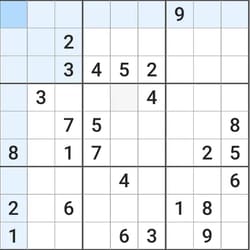
Two quiet games, two very different kinds of thinking
Sudoku and Daily Solitaire Blue both sit in the brain-game category because neither depends on speed in the same way an arcade game does. They are quiet, structured, and easy to start in a browser. But they create very different mental experiences. Sudoku is about deduction. Daily Solitaire Blue is about uncertainty management.
In Sudoku, the correct number already exists logically. Your job is to uncover it by reading rows, columns, boxes, and candidate patterns. In Daily Solitaire Blue, hidden cards mean you cannot see the full puzzle at once. Your job is to reveal information without using up the flexibility you need later. That difference changes everything.
Sudoku rewards clean logic
Sudoku is strongest when you want a pure reasoning challenge. The board gives you fixed rules, and every valid placement must respect those rules. If you enjoy proving why a move is correct before making it, Sudoku is probably the better fit.
The satisfaction comes from clarity. A difficult Sudoku does not need flashy feedback. One solved cell can unlock another, and a hidden pattern suddenly becomes obvious. That moment feels like the board finally admitting what it knew all along.
Daily Solitaire Blue rewards flexible planning
Daily Solitaire Blue feels more uncertain because hidden cards and deck order affect the path. You can make a move that looks reasonable and later discover it removed an important bridge. This does not make the game less thoughtful. It makes the thinking more adaptive.
A strong solitaire player asks different questions: Should I reveal a hidden card now? Should I save this empty column for a king? Should I move this card to the foundation or keep it as a connector? The best move is often the one that preserves future options.
Which one is easier for beginners?
Daily Solitaire Blue may feel easier at first because many players already recognize card sequences and alternating colors. You can make progress even without understanding every strategic detail. Sudoku can feel stricter because one wrong assumption can quietly disrupt the whole grid.
But beginner-friendly depends on personality. If you like visible movement and gradual reveals, Daily Solitaire Blue is easier to enjoy. If you like exact rules and no hidden information, Sudoku may feel more comfortable.
Which one has better replay value?
Both have strong replay value, but for different reasons. Sudoku offers replay through difficulty and pattern variety. A new grid gives a fresh logic structure. Daily Solitaire Blue offers replay through deals, hidden cards, and daily challenge rhythm. A failed run often makes you wonder which early move changed the outcome.
Sudoku's replay is analytical. Daily Solitaire Blue's replay is experimental. One asks, did I reason correctly? The other asks, could I have managed the unknown better? Neither answer is final, which is exactly why both games keep players returning.
Which is better on mobile?
Sudoku works well on mobile when the interface is clear and the number input is comfortable. It is best for focused sessions where you can pay attention to candidates and avoid mis-taps. Daily Solitaire Blue may feel more relaxed on mobile because dragging cards and revealing stacks has a familiar rhythm.
For a quick break, Daily Solitaire Blue may be easier to enter. For a focused brain-training session, Sudoku may feel more rewarding. The better mobile game depends less on the device and more on how much attention you want to spend.
Final verdict: better for what?
If you want strict logic, choose Sudoku. If you want flexible planning with hidden information, choose Daily Solitaire Blue. If you want a calm game that still gives you a sense of improvement, both are worth keeping close.
The smarter choice may be to use them differently. Play Sudoku when you want to slow down and prove your decisions. Play Daily Solitaire Blue when you want a quiet puzzle with just enough uncertainty to make the next card feel important.
Sudoku: Logic Master Q&A
Is Sudoku harder than Daily Solitaire Blue?
Sudoku can be harder when the grid requires advanced deduction. Daily Solitaire Blue can be harder when hidden-card decisions punish early mistakes. The real difference is not harder or easier, but transparent logic versus uncertain planning.
Which game is better for brain training?
Sudoku is better for deduction, pattern elimination, and disciplined attention. Daily Solitaire Blue is better for planning, patience, and adapting when new information appears. A balanced brain-game habit can include both because they train different skills.
Which game should I play first?
Play Sudoku first if you want a clean logic challenge with no hidden cards. Play Daily Solitaire Blue first if you want something familiar, visual, and a little more forgiving at the start. Try both for five minutes and keep playing the one that makes you think you can do better on the next round.